Me, Myself and PDA

Hello, my name is Julia and I’m an adult living with a diagnosis of Pathological Demand Avoidance (PDA). I also have a diagnosis of ADHD and Psychotic Episodes. PDA is a lifelong Pervasive Developmental Disorder and was first described by the late Prof. Elizabeth Newson in 1980. PDA is an Autistic Spectrum Disorder (ASD). Despite PDA being older than me (just) there are still massive gaps in its recognition, peoples’ understanding and its diagnosis by professionals. I’m one of the lucky ones and this is my story…….

  • Home
  • What is PDA?
  • BOOK ME
  • INFORMATION & SUPPORT
  • Contact Me
  • PDA AUTONOMOUS PARENTING
  • YOUR PDA QUESTIONS ANSWERED
  • INTERVIEW WITH PHIL CHRISTIE
  • GUEST POSTS AND INTERVIEWS

YOUR PDA QUESTIONS ANSWERED (part 4)

Posted by juliadaunt on September 23, 2014
Posted in: ALL POSTS, YOUR PDA QUESTIONS ANSWERED. Tagged: Adult PDA, Anxiety, ASC, ASD, Autism, autism spectrum condition, autism spectrum disorder, Autistic, Autistic spectrum condition, Autistic Spectrum Disorder, Awareness, Newsons syndrome, Pathological Demand Avoidance, Pathological Demand Avoidance syndrome, PDA, PDD, PDD-NOS, Questions. 2 Comments

Hello everyone! 😊 Sorry part 4 has been rather slow in coming but at least it’s here now – enjoy!

Melanie – I would like to know, do you look back on your childhood with fond memories? I wonder with all the problems that my son has is he truly happy and will his childhood will be tarnished by the problems he faces, and does it get easier as you get older?

This is a difficult one Melanie. I think on the whole that I was happy as child but I also have a lot of memories of some dark times. I also think that I remember my childhood with rose-tinted glasses to a certain extent. Perhaps because I was so manic and off my face with unmedicated ADHD I think that muddied the waters slightly and caused me to appear happier than I actually was but also caused me to be happier than I would have been if I only had PDA. I do have memories of feeling like a freak and an outcast. I do remember struggling to make and maintain friendships, which I still struggle with now. I can’t always read people properly and it’s led to me having my fingers burnt on more than one occasion. 😢 Also as an adult I’ve become so good at ‘hiding’ my PDA that I think people often forget that I have it and then when I do act strangely or say something that offends them they act all surprised or get mad at me. I’m not saying that I deserve special treatment or anything but it would be nice if people just tried to remember that I am different, that I don’t see things the same way as they do, that I might misinterpret things that they say and that when I do mess up that they remember that I have PDA. That’s all I ask. I don’t think that’s too much really.

Ruth – I am also wondering when and how you found out about PDA affecting you, and how you felt about it as a child/young person?

Even though I was diagnosed at age 12.5 I wasn’t really aware of PDA properly until I was about 26. It wasn’t really ever discussed at home or school so it just faded into the background. It wasn’t until I was messing about on Google one day and I typed it in and was pleasantly surprised at just how much information there was out there! I was stunned. I had always been told that PDA was extremely rare, hence why I hadn’t bothered to research it before, but obviously this information was wrong. I joined the then-PDA Contact Group looking for support, answers and others with PDA. It really was a lightbulb moment. I wasn’t alone anymore. I read up on PDA and realised just how much of my personality was down to PDA. I know there’s a clue in the title but I really had no idea, I just thought that was normal, if that makes sense. Up until a few years ago I used to hide the fact that I had PDA from everyone, partly because I didn’t understand it properly myself and partly because I was ashamed to say that I had an ASD. I’m now ashamed that I ever felt like that. 😔 I’m now proud to say that I have PDA and I don’t care who knows. I won’t hide anymore. 😃

IMG_2142.JPG

Tracy – Have you considered having or do you want your own kids? How do you think you would manage?

There isn’t really a simple and straightforward answer to this question. I’ve thought long and hard about it and if I’m honest there were times when I was younger when I thought I might like children but they were only fleeting moments and I don’t have them anymore. I would say that no I don’t want children. It’s something that Paul and I have had conversations over and we’ve both agreed that it’s not something that we want. It certainly makes life much easier that we are on the same page! Don’t get me wrong I do like children but the whole idea of having my own fills me with dread if I’m honest, mostly because of the genetics involved. I know that the chances of me having a child on the spectrum are high and I wouldn’t want to do that to the child. I also don’t think I would be able to cope with the demand of being a mum. I barely cope with the demands of life as it is, let alone adding a child into the mix. Paul and I are happy as we are, neither of us has a yen to become mummy and daddy and we like our life together the way it is. I’m happy just to be an ‘auntie’ and Godmother – that’s enough for me. 😊

Andy – Did you ever hit out at your parents? Did you really mean it to hurt them and did you understand if it hurt them? That may sound strange but our 6 year old son often lashes out at us and it can hurt. Sometimes he’s not bothered and will laugh, other times when he has scratched/hit to where it’s obvious it’s hurt us he just stares at us kind of blankly and were not sure what to make of it.

I used to hit out at my mum, and other family members/friends, all of the time. I was extremely violent. I think there were times when I did mean to hurt them but most of the time I was just reacting in what was the only way I could react to a stressful or upsetting situation. There certainly were more than a handful of times that when I had been wronged or hurt by someone I did seek revenge by hitting and hurting them but like I’ve said this didn’t happen all of the time and wasn’t the norm. I would say that usually I had no idea of what I was actually doing when I was in meltdown. When you are in the thick of it like that other people just don’t matter. They can’t matter. It would be too much to bear to take on how your behaviour might impact. It’s pure survival-mode and certainly isn’t personal. It’s quite hard to explain so I hope this is making sense. I can really relate to your son looking blankly at you when he’s feeling like this. Sometimes it can feel like no one else is there. It often is confusing when we come out of meltdown. Very mixed feelings over what has just happened. Sometimes I remembered it and others I didn’t. More often than not I couldn’t remember hurting others so when I was ‘accused’ I would deny it and stand my ground. People used to think I lied a lot but it was more likely that I had in fact blanked out during the meltdown. Things are much better now. My meltdowns tend to not be violent but I am still extremely cruel with what I say. 😟

IMG_2141.JPG

Nikki – I would like to know how a parent with PDA can effectively parent a child with PDA when they still have their own issues to deal with?

This is a difficult one Nikki as it’s not an area I have any personal experience in and nor will I. I think the most important thing would be support. People that I know who have PDA themselves and have children have all said that support for them and support for the family as a whole is vital. I guess this question will keep up as more and more of the PDAers grow up and start families of their own. I think more services need to be in place now to help those in need currently but also to make sure that the youngsters have the support we never had. I don’t think that having PDA needs to stop anyone from having a child. Sure it’s a hurdle and it might be tough but with the correct support why shouldn’t it be possible. Not having children is a decision that I made a long time ago and it’s a very personal choice/everyone is different. I know for a fact that I wouldn’t cope without a ton of support. I would like to think that should I ever change my mind that support would be available but currently it isn’t, well not at the level that many I’ve spoken to need. This has to change. The lack of support across the board is sickening. I hope this answers your question. X

Debbie – My question is about adult diagnosis and how do you cope with knowing you have PDA but not having a formal diagnosis and having a condition that is not very well known. I’ve spoken to health professionals who haven’t heard of PDA so therefore will not accept the condition is real how to you deal with that?

I do have a formal diagnosis Debbie but I know plenty of adults who don’t. Speaking to them it’s very upsetting, knowing you have a condition but not being believed. A diagnosis is vital, at any age, because it’s complete affirmation – you aren’t nuts, you cannot help the way you are, you aren’t an evil freak of nature who is destined to live life alone and that there are others just like you. It’s validation. It also means that society, on the whole, will take you seriously when you say you can’t rather than just looking at you with that “oh come on” expression. I tend to only spend time with people who understand PDA, either because they have it or someone they know has it. I’m finding that the ‘neuro-typical’ world holds less and less for me the older I get. It’s too much effort to bend and shape to fit the preconceived ideal of normal and I won’t do it anymore. I can’t. Of course I do NT things and I can and do behave correctly in social situations and I don’t have a problem following the rules/laws but I’m talking about changing who I am just so I can be accepted by friends. It’s not happening I’m afraid. I’m tired of being fake. It’s like living in a permanent state of role play. This is partly why I can’t work. It would be exhausting and I know I couldn’t cope. No one could keep up the level of pretence that is needed for me to live in the NT world. It really pisses me off when so-called professionals say PDA doesn’t exist etc just because they’ve never heard of it before. I can’t help but take it personally when they say that. It feels like they are rejecting everything that makes me, me and yes that does hurt. I know it’s crazy but that’s just how it feels. 😕

IMG_2140.JPG


I hope you’ve found this helpful and that it’s given you a bit more of an insight into what it’s like to have PDA. 💜

Follow the link to read parts 1, 2 and 3 of YOUR PDA QUESTIONS ANSWERED

Share this:

  • Tweet
  • Click to email a link to a friend (Opens in new window) Email
  • Click to print (Opens in new window) Print
  • Click to share on Reddit (Opens in new window) Reddit
  • Share on Tumblr
  • Pocket
Like Loading...

Get Ready For a PDA Explosion of Awareness!!

Posted by juliadaunt on September 16, 2014
Posted in: REBLOGGED BY ME. Leave a comment

Share this:

  • Tweet
  • Click to email a link to a friend (Opens in new window) Email
  • Click to print (Opens in new window) Print
  • Click to share on Reddit (Opens in new window) Reddit
  • Share on Tumblr
  • Pocket
Like Loading...

There is no such thing as an Autistic Adult

Posted by juliadaunt on July 17, 2014
Posted in: ALL POSTS. Leave a comment

Read on. It’s not what you think. X

pensiveaspie's avatarPensive Aspie

Autism only occurs in children.  Because it is a childhood disorder, as an autistic child leaves adolescence behind, the symptoms of their autism will gradually decrease and disappear. By the time the person is an adult, they will be completely Autism-free. They will have no need for speech or physical therapy. No need for mental health services. They will be fully functioning adults – ready to get a job, go to college and begin their new life without autism.

Notme!

Of course this is ABSOLUTELY, 100% NOT TRUE, but this is something I am told every day by the media and organizations that claim to “support Autism.”

When I first suspected I had Asperger’s, I immediately began looking for more information about a diagnosis and support. A google search of Autism and Jacksonville, FL was hopeful. So many resources! CARD (Center for Autism and Related Disabilities). The HEAL (Healing Every Autistic…

View original post 936 more words

Share this:

  • Tweet
  • Click to email a link to a friend (Opens in new window) Email
  • Click to print (Opens in new window) Print
  • Click to share on Reddit (Opens in new window) Reddit
  • Share on Tumblr
  • Pocket
Like Loading...

BEAUTIFUL COREY

Posted by juliadaunt on July 12, 2014
Posted in: ALL POSTS, AWARENESS, MY MENTAL HEALTH. Tagged: ADHD, Anxiety, ASC, ASD, Attention Deficit Hyperactivity Disorder, Autism, autism spectrum condition, autism spectrum disorder, Autistic, Autistic spectrum condition, Autistic Spectrum Disorder, Awareness, Bi-Polar, CAMHS, Child and Adolescent Mental Health Services, Depression, Mental health, Newsons syndrome, Obsessive Compulsive Disorder, OCD, Pathological Demand Avoidance, Pathological Demand Avoidance syndrome, PDA, PDD, PDD-NOS, Psychosis, Self harm. 6 Comments

This is a letter of complaint that I’ve sent to CAMHS in response to the horrific treatment that Corey has received. Although this letter pertains to one particular assessment Corey’s “battle with CAMHS” has been raging on for years. This beautiful young man receives no regular help or support from services apart from useless assessments such as this one. He’s also undiagnosed and unmedicated. His mother has given me permission to share this chapter of his story with you all.

Dear Dr T,

REF: Corey, aged 10.

My name is Julia Daunt and I am a good friend of Corey’s mum, Louise, and I was also present at his assessment that took place on 23rd May 2014 at Great Ormond Street Hospital. I am writing to you with regards to the assessment letter that was sent to Dr. P and I wish now to go through the letter with you and highlight our complaints and issues therein.

Firstly in your opening paragraph you state that “Corey’s behaviour is not in-keeping with PDA or bi-polar” and that “Corey’s behaviour is related to his insecurities and anxieties”. I wish to point out that it is my belief that Corey is insecure and anxious because of an underlying condition, such as bi-polar. No child is as insecure or anxious as Corey without good reason and cause, a point that you have failed to note. I do not see how on earth you can completely rule out bi-polar, PDA or anything else for that matter after an assessment lasting only 1 hour. Corey is a very complex case and I believe that he needs to be assessed over a longer period of time in order that a clear picture is made. He struggles to open up and trust “doctors”, hence the need for a longer assessment time, so that his trust can gradually be earned.

Corey suffers from what I would call severe lability of mood. This happens both at home and at school. School have noted more and more instances of quick mood changes and self-harm. He is also now telling his teachers when he hears the voices at school, whereas before he kept it to himself for fear of not being believed or being mocked in some way. It is my belief that your colleague Dr. S misunderstood Corey during the 1:1 assessment. Corey has denied that he said “he knows that the voices aren’t real” and I can confirm that he has, on more than one occasion, told me that he is very scared and wants the voices to leave him alone. It is my belief that Corey doesn’t have the understanding needed to know that these voices aren’t real. To him they are very real and very upsetting. I wish to take issue with “He finds these thoughts repetitive and intrusive but not constant” – what exactly does this mean? Corey hears voices every day so what part of that isn’t constant? There is no set pattern to what will trigger the voices either, which is also another pointer to a psychiatric condition, such as bi-polar, rather than a child’s stress-coping mechanism. “Corey then feels guilty about having these”, this isn’t the case. Corey feels guilt over his behaviour but not over hearing voices. With all due respect Dr. S spent about 10 minutes with Corey so how can she have gained such an insight into Corey in such a short space of time, especially when she also reported that for some of the 1:1 assessment Corey wouldn’t speak to her. “Corey’s mother stated that he hadn’t had the voices for a while” – well that’s wrong for a start! What she said was that Corey hadn’t had the visual hallucinations for a while, she said nothing of the sort with regards to his auditory hallucinations and as I have said before these happen on a daily basis. “Corey does get low in mood and at various points appeared low but this is not pervasive” – I would like to know what you are basing this on? Corey has had problems from birth which has been getting worse and worse over time and his behaviour runs through every aspect of his day-to-day living, including school. What part of that isn’t pervasive? Like so many children with symptoms like Corey’s many are able to keep a lid on these behaviours when they are out of their comfort zone but as they get older this becomes an all but impossible task for them and the behaviours show themselves more and more in a variety of different situations. This is commonplace and does in no way mean that behaviours aren’t pervasive. “Corey has scratched his arms in response to these voices but does not have further suicidal ideation” – how can you be sure of this after 1 hour? The incident that you are referring to happened whilst he was at school, so yet more evidence that Corey’s behaviours are present at both home and school. I would also like to add that Corey has told me that he wishes he was dead and I believe him. He’s tried, and succeeded at times, to cut himself with anything sharp that he can lay his hands on and threatened to jump out of the top floor window. He has also put plastic bags over his head and tied things around his neck when he was alone in his room. Louise was only alerted to this by Corey’s older brother who thankfully and by accident just happened to notice. Yet more proof that Corey’s self-harm isn’t attention-seeking based. Corey is suicidal.
“His mother reported that Corey threatens to harm himself when wanting his needs met” – I would like to disagree with this statement too. You make a lot of reference to Corey threatening to harm himself when wanting his needs met which comes across like you are trying to say that Corey uses these threats as a conscious act in order to shock and worry his mother into giving him whatever it is that he has asked for, which is utter nonsense. I believe that Corey isn’t in control of the voices or the things that they tell him to do, like self-harming, and therefore it isn’t possible that uses them as a way of blackmailing his mum. Corey has also expressed relief and says it helps him after he has self-harmed, which again is another pointer that was missed.

Corey is a very intelligent young man and I don’t believe that his dislike for school or the work involved has anything to do with his ability to understand or complete the tasks expected of him but is more likely due to his problems. He feels isolated because he’s different. Other children don’t understand him. I’m getting a little concerned that you keep referring to the fact that Corey “smashes up his room when he doesn’t get his own way” like he chooses to do it so he can get his own way. This simply isn’t the case at all. I’ve seen firsthand what happens when Corey is in meltdown and I can assure you that this isn’t a case of just another attention-seeking brat. Yes Corey does swear at his mum but you’ve failed to mention that during the assessment he called Dr. P a “fucking idiot” and he also told one of you that you were “a fucking c*nt”. He also swore at me, the taxi driver and people on the coach. Why did you feel it prudent or helpful to only write that “it was noted during the interview that he swears at his mother” like his behaviour is only limited to her or somehow down to her. Maybe you should take a look back over your notes. I completely refute that “Corey lacks remorse”, Corey is full of remorse and pain for the things that he says and does and if you had spent anytime actually talking and getting to know him rather than just grilling Louise you would have seen that.

Just for the record Louise’s history, such as her mothers death, has absolutely nothing to do with Corey’s behaviours or means that her parenting is nothing short of brilliant. I have watched them both closely on my visits with them and all I see is a very loving mum trying to help her son who is quite literally begging for help. Please stop insinuating that Louise is somehow responsible for Corey’s problems or we will be forced to take this matter further. I would also like it noted that Corey sees his father regularly every other weekend, not intermittently as you’ve stated, and his father lives in Taunton not Bristol.

Corey struggled during the assessment and his behaviour deteriorated, in fact at one point he walked out with me following and I had to cuddle him so he could compose himself in order to rejoin the group. He also threw a piece of metal out of the window but yet you made no reference whatsoever to any of this in the report. Why? It’s more proof that his behaviour isn’t just limited to home as you seem to keep implying.

Louise spent 6 hours completing an online form prior to the assessment that you requested her to do but yet you failed to look at this before the assessment. Please can you explain the purpose of this? Was it just to waste her time? We travelled a long way, Louise spent over £200 traveling from Bristol to London which she cannot afford and most importantly Corey was subjected to added pressure and stress which he can well do without and all for what? So we can be fobbed off? I don’t think so. I would also like to add that a few days after the assessment Louise rang Dr. G with a question but he has yet to return her call or make any form of contact with her. Yet another failing for this family. How bad do things have to become before you act?

I am both horrified and disgusted at the way Corey has been treated throughout his dealings with CAMHS. It is my belief that this treatment is nothing short of a complete dereliction of your duty of care and this cannot continue. Corey needs to be fully assessed and, in my opinion, medicated. It is my belief that he has ADHD, bi-polar and OCD and I am not alone in this. He does not want to ever see Dr. P or PB ever again so you will have to refer his case to someone else I’m afraid. Corey is in a very delicate state at present and it will not do him any good to see people he neither likes or trusts as he will just shut down and become aggressive. You must refer him.

I think that you should write to Corey personally and explain why the help that we all told him he would get now isn’t coming. He has very little faith left in doctors and we cannot disappoint him again. Corey is next to be seen by CAMHS in October and not the weekly basis that was discussed during the assessment. This isn’t good enough! He needs intensive therapy and treatment. He is suicidal and his behaviours are becoming harder to manage. This is an urgent matter.

You have 10 working days from the date of this letter to reply otherwise we will be lodging a formal complaint.

Yours,

Julia Daunt

So that is my letter. Corey has a special place in my heart. I think it’s because I can relate so much to what he is experiencing with the voices and the self-harm. I feel his pain and it breaks my heart to hear him say to me that he wishes he was dead knowing that he really means it. What is it with CAMHS? Can’t children be depressed or suicidal? There’s no minimum age for goodness sake! Mental health disorders are just like any other medical condition or illness – they know no limits or boundaries and can and do happen to anyone at anytime. Children are suffering and why? Budget cuts? Poor training? A doctors unwillingness to learn or write a damn prescription? Refusal to grow a pair and diagnose when others won’t? I don’t get it! It’s not just Corey’s childhood that is being lost here, it’s possibly his whole life. I will fight for Corey. I will fight for us all. Corey can not become just another headline and statistic………

Thank you for reading. ❤ Please share. X

20140712-020856 pm-50936326.jpg

Share this:

  • Tweet
  • Click to email a link to a friend (Opens in new window) Email
  • Click to print (Opens in new window) Print
  • Click to share on Reddit (Opens in new window) Reddit
  • Share on Tumblr
  • Pocket
Like Loading...

Progress On All Fronts!

Posted by juliadaunt on July 11, 2014
Posted in: ALL POSTS, REBLOGGED BY ME. Tagged: ASC, ASD, Autism, autism spectrum condition, autism spectrum disorder, Autistic, Autistic spectrum condition, Autistic Spectrum Disorder, Awareness, Newsons syndrome, Pathological Demand Avoidance, Pathological Demand Avoidance syndrome, PDA, PDD, PDD-NOS. Leave a comment

Share this:

  • Tweet
  • Click to email a link to a friend (Opens in new window) Email
  • Click to print (Opens in new window) Print
  • Click to share on Reddit (Opens in new window) Reddit
  • Share on Tumblr
  • Pocket
Like Loading...

Writing about violence from children

Posted by juliadaunt on July 11, 2014
Posted in: ALL POSTS, REBLOGGED BY ME. Tagged: Adult PDA, ASC, ASD, Autism, autism spectrum condition, autism spectrum disorder, Autistic, Autistic spectrum condition, Autistic Spectrum Disorder, Awareness, Depression, Mental health, Newsons syndrome, Pathological Demand Avoidance, Pathological Demand Avoidance syndrome, PDA, PDD, PDD-NOS. Leave a comment

helenbonnick's avatarHOLES IN THE WALL

Recently I have been contacted by a number of people also blogging about teenage violence, or about diagnoses associated with children exhibiting violence to their parents or others.

Understanding PDA is a website / blog by Jane Sherwin, bringing a wealth of experience about  Pathological Demand Avoidance Syndrome, including a helpful booklet which explains the syndrome for professionals as well as parents, and sharing strategies that have worked with her nine year old daughter.

View original post 200 more words

Share this:

  • Tweet
  • Click to email a link to a friend (Opens in new window) Email
  • Click to print (Opens in new window) Print
  • Click to share on Reddit (Opens in new window) Reddit
  • Share on Tumblr
  • Pocket
Like Loading...

YOUR PDA QUESTIONS ANSWERED (part 3)

Posted by juliadaunt on June 28, 2014
Posted in: ALL POSTS, AWARENESS, FRIENDSHIPS, LIFE IN GENERAL, MY EARLY YEARS, MY MENTAL HEALTH, YOUR PDA QUESTIONS ANSWERED. Tagged: Adult PDA, ASC, ASD, Autism, autism spectrum condition, autism spectrum disorder, Autistic, Autistic spectrum condition, Autistic Spectrum Disorder, Awareness, Depression, Mental health, Newsons syndrome, Pathological Demand Avoidance, Pathological Demand Avoidance syndrome, PDA, PDD, PDD-NOS, Questions. 2 Comments

Here is part 3, discussing anxiety, self-esteem and intimacy. Enjoy and I hope it helps and raises awareness further. 🙂

Colleen – On a scale of 0-10, where would you put yourself as far as general happiness and life satisfaction? If there was some way to magically be neuro-typical, would you take it?

Good question. 🙂 I would say about I’m about a 7 or an 8 on average. Sometimes I dip to a 5 but only for a few days at a time. I’m incredibly lucky – I’ve always been a positive person who doesn’t like to dwell on things for too long. Life is what you chose to make it. Shit happens but I think it’s how we all deal with that shit that shapes who we become, well that’s just my way of looking at it and I understand it’s not like that for everyone else.
There is absolutely no way I would want to be neuro-typical, in fact I couldn’t imagine anything worse! :/ Don’t get me wrong I haven’t always felt like this. I spent most of my life wishing I was ‘normal’ just so the pain would stop. I longed to be accepted but once I accepted that I was different the pain eased. I realised that it was okay to be me, that I did have a place and purpose in this world and that I could be loved. I don’t think I would be me without PDA. I like who am. PDA is my gift that I can use to help others. 🙂

Debbie – How did people help you with your anxiety when you were younger? How do they help you now? And what if anything has changed?

That’s a difficult one to answer. I tend to keep my anxiety to myself, not because no one would understand but simply because if I did tell them then it would be all I talk about! :/ I feel anxious most of the time – it’s just bubbling away under the surface. Simple tasks can push me over the edge. Apart from having an extremely understanding and supportive family and network of friends I don’t have any help with my anxiety, such as medication or therapy, and none has ever been offered since I turned 18. I’m not sure I want that either, I’ve learnt to manage okayish without it and I’m not sure how I would deal with an outsider know-it-all coming in and telling me what’s what. It’s been a long time since I was ‘in the system’ and I don’t really want to open up old wounds. The people around me just know it’s there, under the surface, without me saying. I do tell them, if I can, when it’s about to boil over though – more for their benefit than mine. Time and space is also key. If I say “leave me the hell alone!” then do it. I mean it. I need to be allowed to process the jumble of feelings that are racing through my mind and I can’t do that if someone is there going on and on. Pressing ‘pause’ on things is often the only way I process when I’m on the edge, which I will add happens about once a week now. I think many think that I don’t lose it or have meltdowns anymore but I do. They just aren’t as frequent. Neither are they violent or as lengthy as they used to be but they do still happen.
I’ve always felt anxiety but my fuse has got much longer over the years and so have the triggers. Having people around me who ‘get it’ is the most important thing when it comes to anxiety. Most of my childhood was spent by me feeling intense anxiety but not being able to explain it to people and having ‘traditional’ parenting/schooling inflicted on me so I wouldn’t say that it was managed at all then. I don’t think many realised that anxiety was the root issue. For the first 12 years of my life you have to remember I was ‘just a naughty child’ who needed ‘a good smack’. Once I was diagnosed and the adults involved with my case got on board with PDA then it was much easier and my anxiety was seen as just that and then it began to be reduced. We all then worked bloody hard to undo 12 years of damage for mismanagement and misunderstanding.

Sonja – How do I preserve my child’s self-esteem? What is the one thing you wish your parents knew? And my husband asks: how have you controlled/managed your meltdowns within yourself?

I’m going to have to answer this with the answer that I give most of all and that is: self-awareness is key. They need to know about PDA. Talk to them, please. How can we possibly expect children to make sense of themselves and manage their behaviours if we don’t give them all the facts first? They need to be given the facts and they need to know that it’s okay. Explain that they aren’t alone and that just because they act badly at times it doesn’t mean that they are bad or wrong. Tell them that you understand, even if at times you don’t. Comfort them. Love them.
I wish that my parents were given the affirmation that they needed that it wasn’t ‘bad parenting’ or some other fault of theirs because then I would have been helped sooner and they would have talked to me, explained things and understood me.
As far as meltdowns go it’s been a very long road and one that I haven’t had much outside help with. For me it’s been a personal battle and one that no one could help me with. I had to experience the inner turmoil of seeing the people I loved hurt by my actions but not being able to stop myself from hurting them in order to find ways of coping and not lashing out. It got to a point when I couldn’t cope with the guilt if I hurt them anymore so I was forced to look inward and find a way to stop. It took a lot of work and years of upset but I got there in the end. Developing empathy helped massively.

20140629-043518 pm-59718338.jpg

Anna – Were you distant as a child? Did you prefer to be left alone in your own little world and if so did your family let you be or did they keep trying to reach you?

I was an extremely ‘social’ child, well I liked to be the centre of attention! When I played though I often would play the same game, alone, for hours and I liked it like that. For example I would play with my dolls house on my own for the entire day. No one ‘interrupted’ me either. I think for a number of reasons but mostly because it was clear that at that moment in time I needed some space and they were all probably glad of the space and time away from me! I think it’s important to learn when your child needs that time and space and to allow them to have it. I think it’s also important to still ask them if they would like you to join them but don’t push it and don’t worry when they say no. Remember that our ‘normal’ isn’t the same as yours. Sometimes we need a break from your world, just as you sometimes need a break from our world. Remember that and never use ‘normal’ as your benchmark. 🙂

Tracy – What ‘can’t live without’ advice would you give to kids, teens and emerging adults?

I’m going to start sounding like a broken record here but – self-awareness, learn as much as you can about PDA, talk to people with it, talk to your family and friends but most importantly don’t hate yourselves. Acceptance. You aren’t wrong or bad. You aren’t alone. Love yourself.

Anon – Do you have any issues with intimacy? Were there any problems when you were a child, such as hugging random people?

Intimacy isn’t an issue now but it has been in the past. You see I have always trusted people right from the word go. They never had to earn my trust – it was just given freely and, as you can, imagine some men took advantage of this and it left me not trusting them. Thankfully I struck gold when I met Paul and he showed me that not all men are arseholes. 🙂
As a child I was very inappropriate across the board with strangers, including running up and hugging them. I grew out of such things when I was about 14.

20140629-043712 pm-59832922.jpg

Love to you all. X

Read part 1

Read part 2

Share this:

  • Tweet
  • Click to email a link to a friend (Opens in new window) Email
  • Click to print (Opens in new window) Print
  • Click to share on Reddit (Opens in new window) Reddit
  • Share on Tumblr
  • Pocket
Like Loading...

YOUR PDA QUESTIONS ANSWERED (part 2)

Posted by juliadaunt on June 22, 2014
Posted in: ALL POSTS, AWARENESS, FRIENDSHIPS, LIFE IN GENERAL, MY EARLY YEARS, MY MENTAL HEALTH, YOUR PDA QUESTIONS ANSWERED. Tagged: Adult PDA, ASC, ASD, Autism, autism spectrum condition, autism spectrum disorder, Autistic, Autistic spectrum condition, Autistic Spectrum Disorder, Awareness, Depression, Mental health, Newsons syndrome, Pathological Demand Avoidance, Pathological Demand Avoidance syndrome, PDA, PDD, PDD-NOS, Questions, Self harm. 5 Comments

As promised here is ‘part 2’ of your questions answered. I’ve tried to answer them all as honestly as I can. I’m already working on part 3! 😉 Enjoy. 🙂

Kay – What does it feel like before, during and after a meltdown? Do you feel any remorse/guilt for the things you’ve said or done?

This is an interesting question and one that will have quite a long answer so please bear with me. 🙂 It’s quite hard to put into words the feelings before a meltdown as 9 times out of 10 I don’t see it coming but the ones I do see coming are usually caused by a single event, such as being in a busy supermarket on a Saturday afternoon (!) The others tend to creep up on me and tend to be as a result of many single events all culminating in a meltdown. When in the grips of either meltdown I feel an intense feeling of being overwhelmed. Like I just cannot take anymore and if I were to stay in this environment then I might quite literally explode. I also experience very intense feelings of fear and panic, like everything is out of control, which make me even more anxious than the demand or event that actually triggered the meltdown in the first place. After an instant meltdown I feel embarrassed because I wasn’t able to keep a lid on things and stay in control. I hate the feeling of failure that follows because I couldn’t cope and I’ve had remove myself from a situation. I’m also left feeling physically and emotionally drained, like I’ve been awake and on the go for 2 days, which normally results in me needing to spend a day or 2 doing nothing but watching TV and sleeping. When it’s a built-up meltdown I feel all of the above but I also feel intense guilt and shame at my actions. You see when it’s a built-up meltdown I don’t normally see it coming and it catches me off guard and means that I often flip and lose my temper with Paul. I end up saying and doing things that I know erode our relationship more and more over time and it kills me that I hurt him but I just pray to God that he understands. I can be really vile and I hate it. Remorse and guilt are feelings that I know all too well – I hate hurting the people that I love. Meltdowns are one of the few times that I ever wish that I was “normal”. 😦 Thankfully though they are becoming less frequent and I’m getting better at pulling back once I’ve started in meltdown but sometimes I just simply can’t control it but perhaps with more time and practise I will. 🙂

Anne-marie – What has been helpful/supportive? Also friendships, do they get easier as you get older?

The short answer is love. The longer answer is the love and support I receive from Paul, my family and my friends. I couldn’t manage without it. In the dark periods I need to know that I am okay, that it is worth fighting and that I will be okay which I couldn’t do without this support. Just knowing that I have a group of people around me who don’t judge or hold a grudge is so important.
As far as friendships go, yes I do think that things are easier now I’m older, although like most people I still get my fingers burnt from time to time. :/ I tend to trust people far too much from the outset rather than having them earn my trust and this, as I’m sure you can imagine, has led to my being taken advantage of. I like to think that one of my best qualities is that I’m extremely loyal. I have a great group of friends now, all of whom are PDA aware, and I think that’s the most important thing and which I’m ashamed to say was lacking from my friendships in the past due to my own preconceived ideas. I hid my diagnosis but I’m pleased to say that I don’t anymore. 😀

Kaz – I would like to know what was the most helpful thing for you as an adolescent that helped you make the transition to adulthood and what as parents we can do to make our kids lives a little easier?

For me I would have to say that what helped me the most was Ginny my outreach worker. She was provided by Social Services to spend time with me for 5hrs per week. I used to go to her little cottage and we would sing, play the piano and violin together, do crafts, cook, play cards and we also worked on fitting out a dolls house together. She was amazing and came into my life at just the right time. She helped me to see that it was okay and that life could be more than just a long list of negative and bad behaviours. I am still in contact with her to this day. 🙂 Another person whom I owe a big debt of gratitude to is my home tutor Lizzy, who I am also still in contact with. She made me feel safe and showed me that I could fit back into a school environment and do well. I don’t believe that without these ladies I would be half the person I am today even though when I met them neither one had ever heard of PDA before. They took the time to follow my lead, to learn from me and didn’t judge me too harshly. They gave my mum the break and support that she also needed and allowed me to grow and to navigate the rocky road from teens to adulthood.
I think that as parents it’s vital that you talk to your children, explain things as much as possible, talk about PDA with them and make time for yourselves too. Self-awareness is really the key to PDA – without it, the road of life is much harder to travel. 🙂

Stacey – What would your ideal partner be like? What’s the recipe for a sucessful marriage/relationship?

I’m very lucky as I can wholeheartedly say that I’m with my ideal partner. 🙂 Paul is amazingly supportive, although he is far from perfect and we do have our ups and downs like any other couple, he really is my rock. I don’t know where I would be without him. We met nearly 10 years ago on
Match.com and we just clicked. Suddenly it all made sense: this life. We are complete opposites but that’s what makes it work because what each other lacks the other has in abundance. 🙂 I’m not sure if there is a real recipe for a successful relationship but of course communication is vital and so is laughter. I truly believe that there is that ‘special someone’ out there for each and everyone of us, no matter what is in our past or what difficulties that we may or may not have. 🙂

20140627-044432 pm-60272344.jpg

Caroline – What is the most helpful things that can be done to maintain self-esteem? Is depression an issue, now or in the past?

For me self-esteem was completely lacking from my life until I met Paul, for a number of reasons really. 1. Men weren’t to be trusted, ever. 2. The damage that such a late diagnosis and mismanagement had had on me and 3. General issues arising from being overweight. Although I say it was completely lacking there were times when it was there in my teens but it was soon stripped away again when something went wrong, as it tended to do. I think that it’s vital to hear those 3 words: I love you. Sometimes in the midst of chaos it can be overlooked and forgotten about. I truly believe that self-esteem comes with self-awareness and self-understanding. I beg you, talk to your children.
Yes, I would say that depression has played its part in my life. I have often considered ending it all, I’ve self-harmed a lot over the years and I did once try to commit suicide. Thankfully I’m in a much happier place now than I have ever have been before and depression seems to be a thing of the past, touch wood. The urge to self-harm never really goes away and I still have to remind myself that I can’t when I’m feeling low. I think I’ve dealt with a lot of the ghosts from my past and put a lot of issues to bed once and for all. I think that helps – the past can be more damaging than the present. I wish I had the magic formula for this because I could make a fortune! I’ve just been incredibly lucky to have been blessed with an amazingly supportive partner, family and friends. Don’t get me wrong I’m not perfect and I still have days when I wake up and I can’t face whatever the world has in store for me today but I just have to keep going and ride those days out so that the good days can come.

Clayre – Is there anything that could of helped you more as a child? Also how have you dealt with issues like work, and have anymore serious behaviour issues arrisen?

For me there is only one answer to this and that is: early diagnosis. I sometimes wish that they had seen it sooner because perhaps I wouldn’t have as many issues as I do now and perhaps I wouldn’t have experienced some of the shit that I did but then, on the other hand, I wouldn’t be who I am now if I hadn’t have experienced what I did. I do think though, that no matter what the diagnosis, sooner is better than later. Support is vital too.
Work is something that I’ve never done, well not in the traditional sense of the word anyway. When I was younger I studied for a diploma in preschool practice, for which I had to work in a preschool 3 days a week, but I wasn’t able to cope with the demand to finish coursework so I had to give it up. :/ That was when I was 16 and I haven’t worked since. I just can’t do it. I’ve tried – I’ve had a market stall twice, once selling my hand painted glass and the other selling my handmade cards, but I soon found that demand too much also and had to stop. There was a time in my life when I used to get angry at myself because I can’t work. I felt like a failure and that I wasn’t contributing anything to society. I’ve made my peace with all of that now though and I’m okay with it. I might not be able to ‘work’ but there are other ways I can contribute and feel like a valued member of society, like writing this blog and answering your questions. 🙂

20140627-044603 pm-60363698.jpg

If you have any questions then please feel free to message me. Peace. X

Read PART ONE now! 😀

Share this:

  • Tweet
  • Click to email a link to a friend (Opens in new window) Email
  • Click to print (Opens in new window) Print
  • Click to share on Reddit (Opens in new window) Reddit
  • Share on Tumblr
  • Pocket
Like Loading...

WHY BOTHER???

Posted by juliadaunt on June 18, 2014
Posted in: ALL POSTS, AWARENESS. Tagged: ASC, ASD, Autism, autism spectrum condition, autism spectrum disorder, Autistic spectrum condition, Autistic Spectrum Disorder, Awareness, Pathological Demand Avoidance, PDA. Leave a comment

Why bother? I’ll tell you why we should bother and that’s because it really matters. It matters to me. It matters to them. It matters to those who have come before and to those who’ve yet to come and what is this that matters I hear you ask? Well it’s ASD ACCEPTANCE MATTERS! I want to share an image with you that you might have already seen on Facebook and I just want you to sit there for a moment, just looking………

20140618-035821 pm-57501907.jpg

This photograph shows the House of Commons on Monday 16th June 2014. This was our government discussing Special Educational Needs (SEN). This is the turn out. This is what our government think. Horrific isn’t it???

If the MPs whose empty seats are pictured above had a child or other loved one with an ASD then I reckon there would be plenty more bums on seats than are pictured! It makes me so angry that people only care when it happens to them. We should all care, regardless of personal experiences. These are children we are talking about for goodness sake! Innocent children who need the whole of society to stand up and make sure that they have the best of everything, regardless of differences but as you can see by the photograph above some of our society, namely those we voted to be the voice of the masses, seem to think that it doesn’t matter! How can we exert a change in the masses if our own government don’t give a hoot! Simply speaking we can’t!

Autism Spectrum Conditions and other Special Needs should matter to ALL of us! This is the 21st century and yet Autism and ASDs in general are still a taboo. No one cares until it becomes their problem and “little Bobby” is diagnosed, then the shit hits the fan and suddenly they care! Well, I’m sorry if ASD isn’t glamorous enough. I’m sorry that we can’t have cute puppies selling our story on billboards. I’m sorry that your favourite celeb hasn’t tweeted about it. I’m sorry that ASD scares you. I’m sorry that our MPs, who should be setting an example to us all, can’t be fucked to get up off their arses! 😡

So why bother? Well you should bother because you are a member of the human race too. You should bother because it matters. Perhaps we should set the example to the MPs missing from the above photograph and show them that ASD matters. If ASD doesn’t affect you directly then chances are that it does affect someone you know. We all need to stand together on this and push for more acceptance! Don’t you want your children to inherit a world that doesn’t judge? That doesn’t give to those who can and takes away from those who can’t? All children have the right to an education!

Make it matter to them. Charities like the NAS are a good place to start I think. Yes, their knowledge on PDA is limited but it’s like that everywhere. If you don’t tell them about PDA and you then don’t complain when they don’t put any services into your local area – they aren’t mind readers. If you want MPs to take things seriously and care then tell them that it isn’t good enough! Make a stand!
It should matter to us all, regardless of diagnosis. I joined the NAS because it matters, I give to the PDA Society because it matters, I’m running in the NAS Council Elections because it matters, I’m writing this because it matters, I’m sharing my story because it matters, I fundraise because it matters, I attend meetings and complete surveys because it matters. It all matters. PDA matters! ASD matters! If they don’t hear you then how will they know! SHOUT! LET THEM KNOW IT MATTERS TO YOU AND THAT IT SHOULD MATTER TO THEM!

I implore you, please write to your MPs and make it matter to them too!

Hugs x x x

Share this:

  • Tweet
  • Click to email a link to a friend (Opens in new window) Email
  • Click to print (Opens in new window) Print
  • Click to share on Reddit (Opens in new window) Reddit
  • Share on Tumblr
  • Pocket
Like Loading...

YOUR PDA QUESTIONS ANSWERED (part 1)

Posted by juliadaunt on June 15, 2014
Posted in: ALL POSTS, AWARENESS, FRIENDSHIPS, LIFE IN GENERAL, MY EARLY YEARS, MY MENTAL HEALTH, YOUR PDA QUESTIONS ANSWERED. Tagged: Adult PDA, ASC, ASD, autism spectrum condition, autism spectrum disorder, Autistic spectrum condition, Awareness, Depression, Newsons syndrome, Pathological Demand Avoidance, PDA, PDD, PDD-NOS, Psychosis, Questions, Self harm. 9 Comments

Over the past few months many of you have submitted questions to me and in this post I’m going to try and answer them as best and as honestly as I can. I hope that my answers will give you a little bit more of an insight into PDA, and in turn your own children, but most importantly offer that ‘ray of hope’ that we all seek, so here goes nothing….. 🙂

Carolyn – How does your attitude to being told to do something differ from when you were a child?

My reaction depends on so many different factors like my mood at the time, who is demanding something of me, why they are doing it and how often they’ve made demands of me before. All these factors, and more, play a role so this is a difficult question to answer. If it’s a ‘needed’ demand like hospital staff telling me what they need me to do or what medication I need to take then I’m pretty good at following orders because I know that it’s for my benefit and wellbeing in the long run to comply but I do have to make a conscious effort to suppress the anxiety and I’m not always successful. If it’s a friend or someone in need then I’m often able to push that anxiety down and do what ever it is they ask of me but again not always. If it’s an unfair/unwarranted demand then I simply react by saying no and refusing to budge. People tend to give up at that point but I guess if they were to continue to make the demand then I would have to remove myself from the situation or it might get out of control. Some days though all demands are simply too much. Demands, on the whole, are easier to deal with now I’m an adult because naturally I have far more control over my life than I did as a child. I still cannot cope with being lectured or having a long and ranting list of demands reeled off at me. If you want me to comply ask me nicely and you are more likely to get the desired result. 🙂

Tom – I’d like to know about the transition period – i.e. moving out of the family home and setting up independently. How was this planned for? What support did you have or need during and after the move? What parts were hardest? and what would you do differently if you could do it over again?

I currently live in the annexe to the family home with my partner. I did move out once for about a year when I was 17 or 18 with my ex but we had to return to the family home due to him running up a large credit card debt and me being miserable as a result. As far as I can remember there was no planning on the part of my mum. At that point I was independent and able to make my own decisions and choices. The idea of the annexe was so that we could reduce his debt rather than forking out £400+ a month on rent but he left me less than a year later because he met someone else but thankfully he took his debt with him. 😉 I then remained in the annexe and then I met Paul and he later moved in with me. We’ve been together for nearly 10 years now. We have considered moving and in fact we did move to Wales for 2 days in 2013 – yes, 2 days! We had to return because the property was damp and none of the works that were meant to have been carried out before we moved in had been. We are currently still trying to get our money back. 😦 Although we live in the annexe we live independently. We manage our own money, bills, cooking, cleaning and lives. The whole living next door to mum and dad thing is by no means perfect and we do have rows like all families but on the whole it works well for all of us. The ‘move’ to Wales has left a nasty taste in my mouth but perhaps we will try it again one day. The act of moving is a nightmare! I hate not knowing where my things are. I have to make a list of what is in each box otherwise I would go mad! 😉 It’s safe to say I hate moving, but doesn’t everyone? Perhaps it’s worse for me because the process of finding a new place to live, organising and planning, packing up an entire house and then setting it up again at the other end all leave me feeling pretty helpless and out of control and that isn’t a feeling I can handle. I just had to focus on the bigger picture. Paul had never moved a whole house before and he needed me to be strong and organised. You see when he moved in here with me he moved out of his family home so our ‘move’ to Wales was his first ‘proper’ move. I also think that my stepdad being in the RAF/MoD helped as we had moved quite often when I was child. I’ve moved 10 times in total, which isn’t a huge amount, but it’s enough. Neither one of us could handle doing it again yet. I hope this makes sense – it’s a bit of a ramble. 🙂

Gillian – Why does anxiety rule your life?

That’s a great question but I also think it’s an impossible one to answer fully. You see to me feeling anxious over demands is as normal a reaction as crying when in pain or laughing at a joke. There’s no explanation – it just is, it always has been and always will be. We are hard-wired to become stressed and anxious when demands are made of us – this is just the way we are made. Now I’m not saying that because it’s always been and always will be that I’m happy or comfortable with the high levels of anxiety I feel but there is very little I can do about them. All I can do is try to reduce all unnecessary demands so as to keep my anxiety at a manageable level but it wouldn’t take much to push me over the edge. A scenario I’ve used in the past is this: you and I are both given a bucket and someone keeps pouring in equal amounts of water (demands/anxiety) into each bucket so consequently the buckets begin to fill up, the only difference is that your bucket has tiny holes in it so it never reaches the top and spills over unless the water in was to become greater than the water out. My bucket doesn’t have these holes and so can therefore only ever spill over so I must try and reduce the water in so it doesn’t overflow but at some point my bucket will be full and I will go into meltdown. That is a fact. It really is a daily balancing act. Some days are better than others. I’ve accepted that I have my limitations and that’s okay. I’m not perfect but then who is! 😉 I hope this makes sense and helps. 🙂

Annie – How do you control your anxiety and what do you do to prevent a meltdown?

I think I’ve answered part of this in the above question but I can elaborate further. Every day I must make choices on what ‘demands’ I can cope with. On a bad day that might mean that even brushing my teeth is a demand too far. If I am having a bad day I just do what I can and I won’t push myself because if I do it will just make things worse. If I’m having a good day then I am able to push myself and I will have a fairly ‘normal’ day. There’s really no way of predicting when I will have reached my limit or when my bucket will overflow to carry on the analogy from before, I just have to be prepared that it will happen at some point and I need to deal with it when it does. What I find interesting from speaking to parents is when they say “we only asked him/her to brush their hair and they went into a 3 hours meltdown” – you do realise that the hair brushing demand was more than likely simply just the straw that broke the camel’s back. It was the trigger for the meltdown but it wasn’t the cause. 9 times out of 10 the cause of my meltdowns is an accumulation of stress and anxiety and not one particular event. My meltdowns tend to be far more internalised now than when I was a child. I tend to cry, switch off and sleep a lot when I’m in meltdown. The only way I can reduce the chances of having a meltdown is to reduce my triggers and if I am in a stressful situation, like Morrison’s on Christmas Eve, then I simply walk out and sit in the car because if I had stayed then I would have completely lost it and I couldn’t face doing that in public. I think I would die of embarrassment! I haven’t had a public meltdown for about 15 years and it’s not something I’m prepared to go through again if I can help it.

Hazel – Are u really happy, as in within yourself?

Yes, on the whole I am very happy. Of course I have times when things are hard and sometimes I feel like I can’t go on but thankfully I don’t stay in that dark place for very long now but it is a place I visit from time to time. I also have times when I hate PDA because of how it limits me and makes me feel but I just try to muddle through until I come out the other side. I am incredibly lucky – I have a great partner, a great family, on the whole, and a great group of friends who keep me ‘up’ when I need it and who don’t ever judge me when I need time out and can’t do what I normally do or what is expected. They just understand. It’s a shame there isn’t a bit more of that understanding in this world. What makes me happiest though is helping people and I feel blessed to be able to do so – that makes it all worthwhile and gives my life some focus and a purpose. 🙂

Lynsey – What has been the most influential factor in your life that has helped you cope with PDA and lead a more ‘normal’ and happy life. E.g. a particular therapy or activity? Have you had any epiphanies that have led to you being able to cope more and if so what were they? Are you able to work/hold down a job when you are not the boss? What types of friends suit you, how did/do you overcome the barrier faced by PDA kids/adults to adhere to ‘normal’ social rules? Does this seriously affect you as you get older or can you learn to cope?

Wow, where do I begin! 🙂 Well I guess the most influential ‘therapy’ I ever had as a child was my outreach worker, Ginny. I used to spend Fridays with her. She taught me to cook and encouraged me to be more arty. She really helped to rebuild my confidence and self-esteem that had all but been wiped out by years of feeling like a freak, endless public humiliation due to my behaviour and being expelled from school. I’m still in contact with her now. She’s amazing. 🙂 I would also say that Paul has been an incredible source of strength for me. He’s made me see that it’s okay to be me and that I am loveable just the way I am. 🙂 I have tried conventional therapies, such as CBT, but I found them no use whatsoever. I guess it’s an individual thing and will work for some but not for others.
The biggest ‘epiphany’ I’ve ever had happened a few year ago. I was still keeping my PDA secret from the masses and I just decided to google PDA and ‘ting – lightbulb moment!’ – I wasn’t alone! You see I had always been told that PDA was so rare and that there were no others like me! Oh, how wrong they were! So I cried and then joined the PDA Society, or the PDA Contact Group as it was called then. It was amazing! I felt so empowered! I then decided that I had a sort of duty to share my story but I also wanted to find other adults with PDA so I set up the Adult PDA Support Network on Facebook and waited and slowly but surely adults with PDA joined! 🙂 It’s snowballed from there really. It was my friend Jane who gave me the push and inspiration to take to blogging and public speaking so we have her to thank for that. 🙂 As far as coping better goes, this had naturally happened over the years, despite me keeping my PDA a secret, and so has always been an area of continual progress and improvement.
Work…..there’s an interesting topic! :/ I’ve never worked. I’ve volunteered in charity shops and in playgroups and I’ve done odd jobs for friends. I’ve also had a market stall twice before selling my hand painted glass and then my handmade cards. I’ve also been a Body Shop at Home rep. I’ve tried to dip my toe into work but it’s something that I don’t think I will ever be able to do as it causes me way too much anxiety which leaves me unable to function on any level. It’s just not worth it. I used to beat myself up about it but not anymore now I’ve found another way of being a valued and productive member of society. I’ve realised that it isn’t so bad. I do have a lot to offer after all. I’ve finally found my place and it feels great! 😀
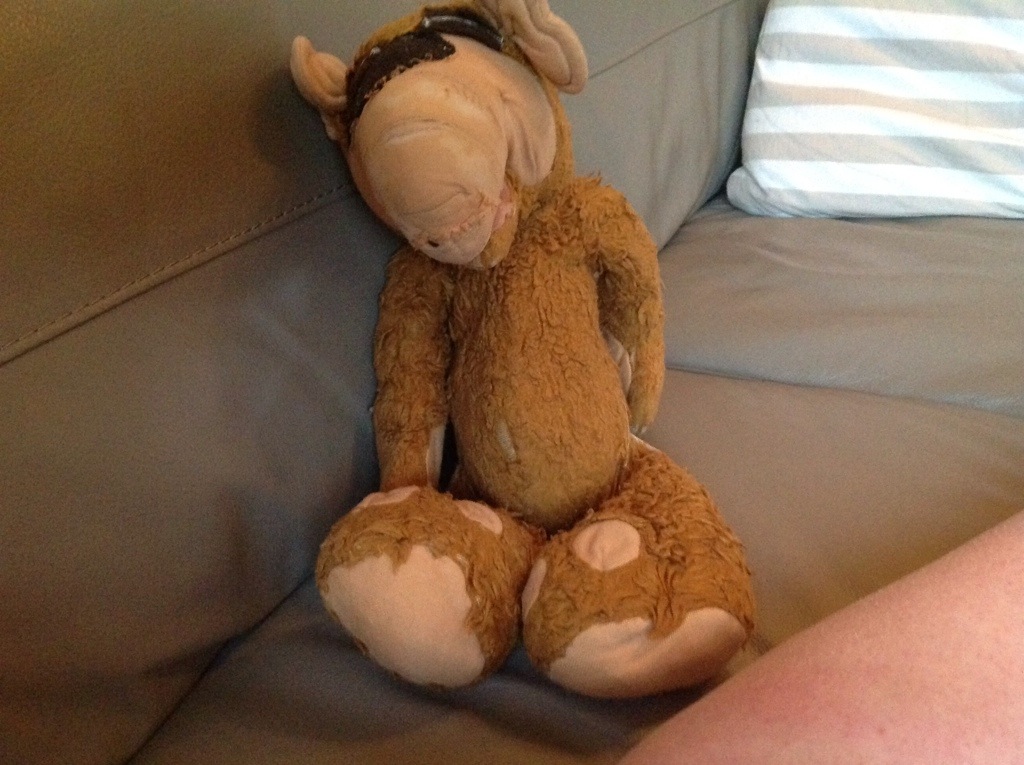
I get along with most people but since my ‘epiphany’ I tend to gravitate towards people who have a link with PDA already. I also found that once I told my existing friends most of them said ‘yeah and?” and just accepted it and me. I did lose friends when I went public with my PDA though. That was extremely painful at the time but if they were really my friends in the first place then they would have least tried to understand and not cut me out of their lives completely. As far as childhood and friends goes that was an interesting time! :/ I only had a few friends that have lasted throughout childhood and I wasn’t invited to parties often. I was a volatile child so most children tended to be extremely wary of me and keep me at arms-length. I should add that for most of my childhood and early teens *ALF was my best friend and I acted as if he were real. I went everywhere with him, told him secrets and would become upset when people didn’t say hello to him. Interesting how I wrote “I went everywhere with him, rather than he went everywhere with me!” :/
I can comfortably follow normal social rules now but that hasn’t always been the case. It’s just something that has happened slowly over the years. A case of trail and error. I have found that as I’ve matured and become self-aware that my social skills have evolved from purely self-preserving and self-motivated social skills that I used to evade demands and expectations into real and proper social skills. It’s funny because now I’m a stickler for following the rules socially – I can’t bear it if people are rude and impolite. I’m also a stickler for following the letter of the law although I always have to just put one toe on the grass when the sign says “keep off the grass” and I always touch to see if the paint really is wet! I just can’t help myself! 😉

I hope this has been helpful, informative and has opened a few more eyes to living with PDA. I’ve thoroughly enjoyed writing it and hopefully I will be doing a few more posts like this over the next few days and weeks.

If you have any questions you’d like me to have a go at answering then please contact me and helpfully I’ll be able to help. ❤

*This is ALF. He’s still really important but not in a Norman Bates way anymore! 😉

20140615-105625 pm-82585182.jpg

Read part 2 now! 😀

Share this:

  • Tweet
  • Click to email a link to a friend (Opens in new window) Email
  • Click to print (Opens in new window) Print
  • Click to share on Reddit (Opens in new window) Reddit
  • Share on Tumblr
  • Pocket
Like Loading...

Posts navigation

← Older Entries
Newer Entries →
  • Like On Facebook

    Like On Facebook
  • Follow Me, Myself and PDA on WordPress.com
  • Follow me on Twitter

    My Tweets
  • Blogroll

    • http://www.autism.org.uk/about/what-is/pda.aspx Information on PDA and other ASD’s Information on PDA and other ASD’s
    • http://pdasociety.org.uk Online Forum & Information Online Forum & Information
    • http://dinkyandme.wordpress.com/ Join Dinky & her mum on their PDA journey Join Dinky & her mum on their PDA journey
    • http://www.stephstwogirls.co.uk/ Steph is a Mum of two little girls, one of whom has a diagnosis of PDA Steph is a Mum of two little girls, one of whom has a diagnosis of PDA
    • Autism East Midlands, formally NORSACA  Quality of life for people with autism Quality of life for people with autism
    • North Devon Forum for ASC & ADHD Parent-lead group with charity status offering support, advice and days out Parent-lead group with charity status offering support, advice and days out
  • Recent Comments

    Kerry McQuade-Mallon's avatarKerry McQuade-Mallon on AN INTERVIEW WITH PHIL CH…
    Nick Cahill's avatarNick Cahill on PANDEMIC CHRISTMAS, PART …
    Lapellar's avatarLapellar on ISOLATION HEAVEN
    Diana Bright's avatarDiana Bright on ISOLATION HEAVEN
    juliadaunt's avatarjuliadaunt on ISOLATION HEAVEN
    Vicky Thompson's avatarVicky Thompson on BEAUTIFUL COREY
    juliadaunt's avatarjuliadaunt on CRAP START TO 2020!
  • Recent Posts

    • BLAME IT ON THE AUTISTIC May 20, 2023
    • PANDEMIC CHRISTMAS, PART ONE December 21, 2020
    • ISOLATION HEAVEN April 11, 2020
    • FEELING CRAFTY January 4, 2020
    • CRAP START TO 2020! January 2, 2020
  • Enter your email address to follow this blog and receive notifications of new posts by email.

    Join 3,058 other subscribers
  • Tags

    ADHD Adult PDA Anxiety ASC ASD Attention Deficit Hyperactivity Disorder Autism autism spectrum condition autism spectrum disorder Autistic Autistic spectrum condition Autistic Spectrum Disorder Awareness Bi-Polar CAMHS Child and Adolescent Mental Health Services Depression Diagnosis ENC Help Information Mental health MY MENTAL HEALTH Newsons syndrome Obsessive Compulsive Disorder OCD Pathological Demand Avoidance Pathological Demand Avoidance syndrome PDA PDD PDD-NOS Psychology Psychosis Questions Self harm Slimming World Stress Support
  • Categories

    • ALL POSTS
    • AWARENESS
    • FRIENDSHIPS
    • GUEST POSTS & INTERVIEWS
    • LIFE IN GENERAL
    • MY EARLY YEARS
    • MY MENTAL HEALTH
    • REBLOGGED BY ME
    • YOUR PDA QUESTIONS ANSWERED
  • Blogs I Follow

    • Rhubarb & Burble
    • Jane's Patisserie
    • Actually Autistic Blogs List
    • Riko's blog: PDA and more.
    • A recycled lifestyle...
    • Indigoasis
    • amelias altered art
    • Someone's Mum
    • Me, my boys and PDA
    • kathleen kerridge
    • You, Me and Life dealing with the triple A's
    • Doubtful Mum
    • lovemypdagirl 💗
    • maycontaintracesofautism
    • Hedgehog and Rabbit
    • Living with Autism
    • WordPress.com News
    • Attentionality
    • Pensive Aspie
    • HOLES IN THE WALL
  • ALL POSTS AWARENESS FRIENDSHIPS GUEST POSTS & INTERVIEWS LIFE IN GENERAL MY EARLY YEARS MY MENTAL HEALTH REBLOGGED BY ME YOUR PDA QUESTIONS ANSWERED
  • Top Rated

  • Archives

    • May 2023
    • December 2020
    • April 2020
    • January 2020
    • December 2019
    • October 2019
    • July 2019
    • April 2019
    • February 2018
    • December 2017
    • July 2017
    • May 2017
    • October 2016
    • January 2016
    • July 2015
    • April 2015
    • February 2015
    • January 2015
    • December 2014
    • October 2014
    • September 2014
    • July 2014
    • June 2014
    • May 2014
    • April 2014
    • March 2014
    • February 2014
  • Blog Stats

    • 239,255 hits
Blog at WordPress.com.
Rhubarb & Burble

Pretty things!

Jane's Patisserie

Actually Autistic Blogs List

A list of blogs by Actually Autistic bloggers

Riko's blog: PDA and more.

"Demand avoidance is a way of life for you, isn't it?"

A recycled lifestyle...

where secondhand is always first choice...

Indigoasis

Upcycling, sustainable living, arts, crafts and soapy things.

amelias altered art

Someone's Mum

Me, my boys and PDA

kathleen kerridge

You, Me and Life dealing with the triple A's

Autism, Anxiety and Allergies. Please feel free to email me abigailbrookshalling@gmail.com

Doubtful Mum

lovemypdagirl 💗

Bringing up a child with ASD

maycontaintracesofautism

Hedgehog and Rabbit

The prickly and the soft of life.

Living with Autism

WordPress.com News

The latest news on WordPress.com and the WordPress community.

Attentionality

Thoughts from an ADHD physician, father and patient

Pensive Aspie

Amusing musings from an Aspergian on planet Earth.

HOLES IN THE WALL

documenting parent abuse

Me, Myself and PDA
Blog at WordPress.com.
Privacy & Cookies: This site uses cookies. By continuing to use this website, you agree to their use.
To find out more, including how to control cookies, see here: Cookie Policy
  • Subscribe Subscribed
    • Me, Myself and PDA
    • Join 235 other subscribers
    • Already have a WordPress.com account? Log in now.
    • Me, Myself and PDA
    • Subscribe Subscribed
    • Sign up
    • Log in
    • Report this content
    • View site in Reader
    • Manage subscriptions
    • Collapse this bar
 

Loading Comments...
 

    %d